Articles · Research
Does hard gum build jaw muscle? What the research says

Your jaw muscles are skeletal muscles, the same kind as your biceps. Give them more resistance than they are used to, often enough, and they adapt. The question is how much hard gum can do, how fast, and what it can't change.
Why soft food leaves your jaw under-trained
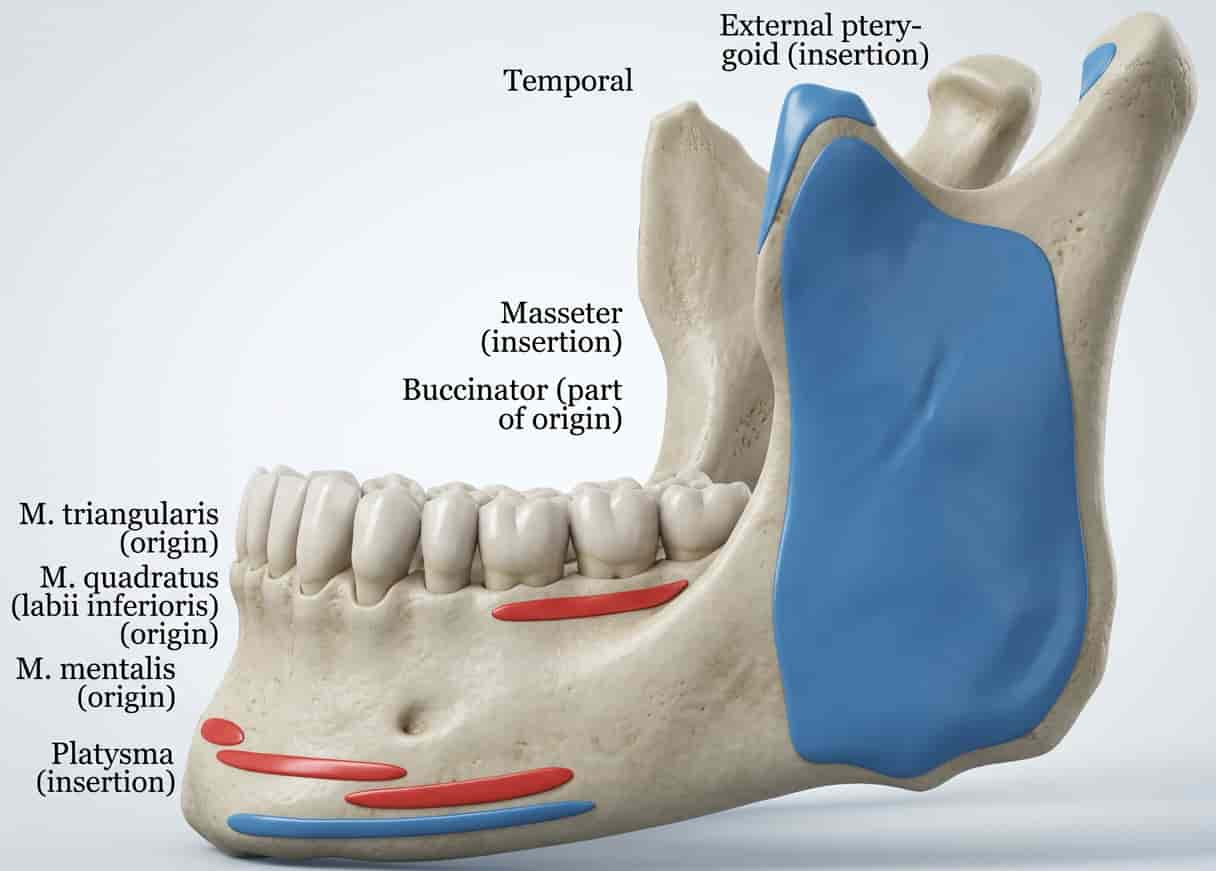
Most of what we eat today is soft and processed. A few minutes of light chewing a day is not much of a stimulus for the masseter, the thick muscle at the back of your jaw. Ordinary chewing gum doesn't change that: it softens within minutes, so the load drops almost as soon as you start.
Hard gum is designed to do the opposite. It stays dense, so every chew works against resistance, much like a set with a weight that is heavy enough to matter.
What the studies found
The clearest data comes from dental research on masticatory muscle training:
- Bite force and endurance go up. In a study from the University of Gothenburg, 40 healthy young adults followed a chewing-exercise programme. Both maximum bite force and endurance improved, and the gains peaked after about three months of training.1
- Consistency matters. In the same study, a group that paused for a month after two months of training ended up clearly weaker than the group that kept going. When training stopped, the effects faded.1
- Not everything changes in four weeks. An earlier Swedish study had volunteers chew hard mastic gum for an hour a day for 28 days. It looked at chewing efficiency, not strength, and found no significant change in that time.2
Put together: jaw muscles respond to training, but on the timescale of weeks to months, and only while you keep it up. That is exactly why the JAWZR plan runs every day for 30 days and then continues.
What the research doesn't show
These studies measured strength and endurance. They did not measure how a jaw looks in photos. A bigger, stronger masseter can add some width at the angle of the jaw, but the visible outline also depends on body fat, bone structure, posture and genetics. That's why we don't promise a new face in 30 days. What you can expect is to feel the muscle working from the first session and to get stronger with consistent training.
How to train it sensibly
- Start easier than you think. Week 1 on Hard lets the muscle and joint get used to the load.
- Train in rounds. 3 minutes slow and heavy, 2 minutes faster, 3 minutes rest. Two or three rounds on a full day.
- Alternate full and light days. Recovery is part of training. A light day keeps the habit without overloading the joint.
- Cap it at 15 minutes a day. More is not better for a small joint.
- Stop if it hurts. Muscle burn that fades within a day is normal. Sharp pain, clicking or locking is not.
Want to train your jaw? JAWZR hard gum comes with a 30-day plan: 8–15 minutes a day, alternating full and light days.
Shop hard gumSources
- He T, Stavropoulos D, Hagberg C, Hakeberg M, Mohlin B. Effects of masticatory muscle training on maximum bite force and muscular endurance. Acta Odontologica Scandinavica 2013;71(3–4):863–869. Link
- Tzakis MG, Kiliaridis S, Carlsson GE. Effect of chewing training on masticatory efficiency. Acta Odontologica Scandinavica 1989;47:355–360.
This article is general information, not medical or dental advice. If you have jaw, joint or dental problems, ask a dentist before training your jaw.